

Type "how much should a contractor pay per lead" into Google and every page that comes back gives you a range it didn't measure, usually "$50 to $300 depending on your market," and stops there. That isn't an answer. A $50 lead that never becomes an estimate is money gone. A $300 lead that books an $80,000 kitchen is the cheapest thing you bought all year. The lead price is an input. The output is what one booked job cost you, and that's the number this guide works all the way through, with the published 2025 and 2026 figures, real job values, and the point at which you turn a channel off.
It's the same number the contractor website design page builds its monthly scoreboard around. This is the long version of why.
Three Things That Get Called a Lead
Most of the confusion in lead pricing is that four different things get the same name. Keep them apart and the math gets easy.
- A click. A homeowner landed on your page. On Google search ads, contractors pay about $5 for one. It is not a lead. Thirty of them will leave without doing anything.
- A lead. The homeowner called, texted or filled in your form. This is what Google, Angi and Thumbtack charge you for, and it's the number every benchmark quotes.
- An estimate. You got the homeowner on the phone, they were real, in your area, and wanting the work you do, and a visit got scheduled. Half your leads won't get this far. Wrong town, wrong job, tire-kicker, never picked up when you called back.
- A booked job. They signed. This is the only one that pays for the truck.
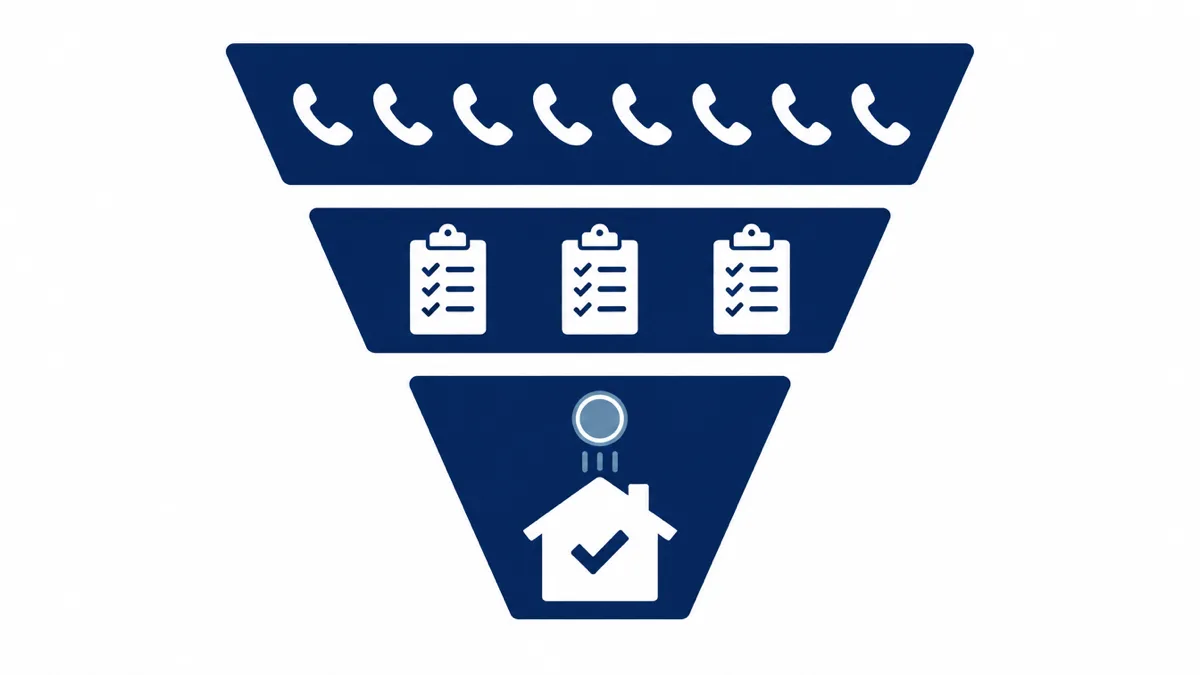
Every lead price you'll ever be quoted sits at the second stage. Every dollar you'll ever make sits at the fourth. The two numbers in between, what share of leads become estimates and what share of estimates become jobs, are yours and nobody else's, and they matter more than the lead price does. The math below shows exactly how much more.
What the Published Benchmarks Actually Say
There are fewer measured numbers out there than the blog posts suggest. These are the ones that come from the platform or publisher itself, with a date and a sample size.
Google search ads, construction and contractors. LocaliQ's 2025 home services benchmarks, drawn from 3,211 US campaigns running April 2024 to March 2025, put the median cost per click for construction and contractors at $5.31, the lowest of every home-services category measured, and the median cost per lead at $165.67, the third highest. Only 2.61% of those clicks turned into a lead. For comparison, roofing and gutters ran $10.70 a click and $228.15 a lead, plumbing $129.02 a lead, electricians $93.69, and the home-services median $90.92.
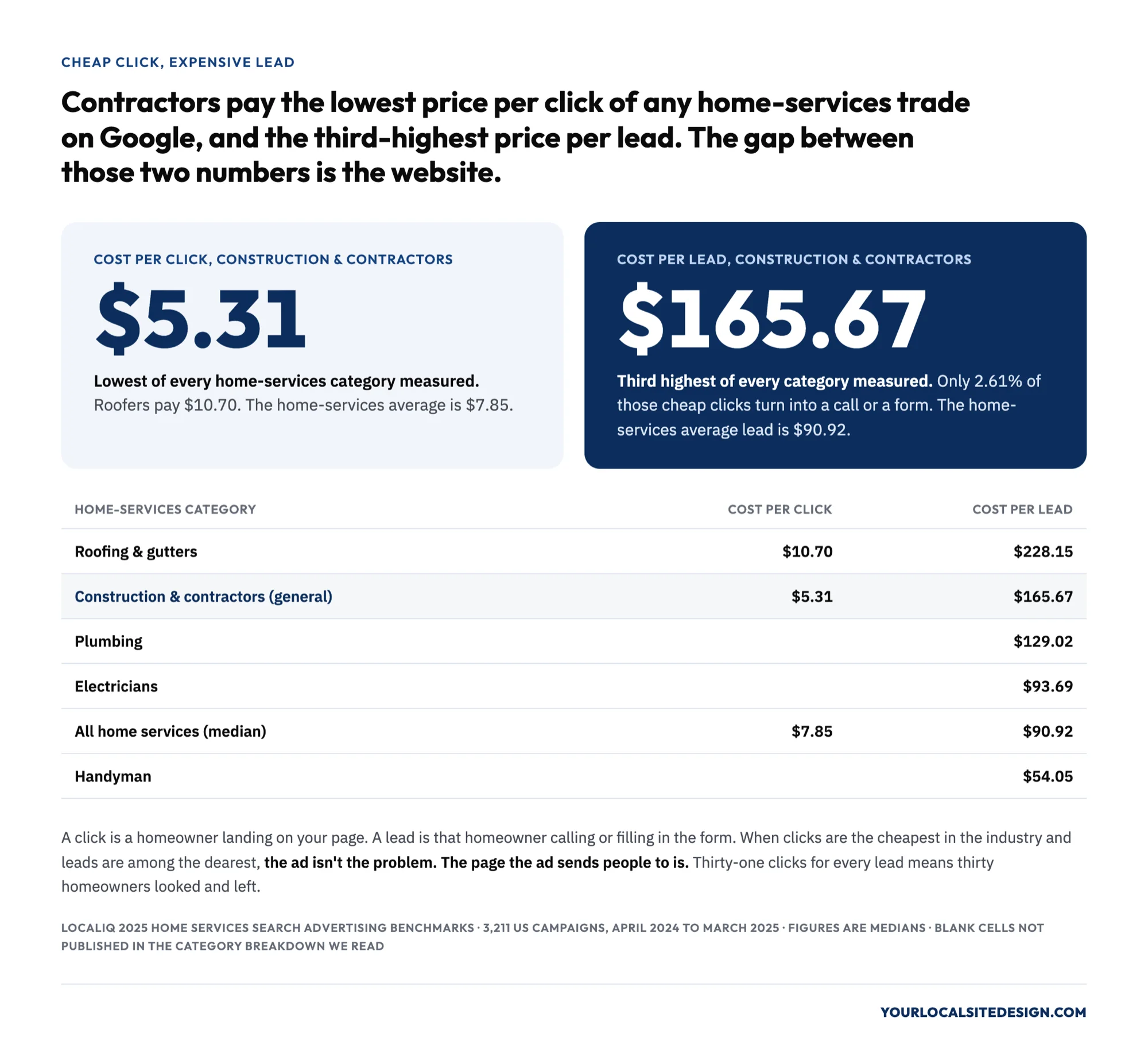
Read those two numbers together. Contractors get the cheapest clicks in home services and some of the most expensive leads. That gap is not the ad. It's the page the ad sends people to. Thirty-one clicks for every lead means thirty homeowners looked at the site and left, and the ones who leave fastest are the ones who couldn't find the phone number, a photo of a job like theirs, or a license number in the first ten seconds. That's a website problem wearing an advertising costume.
Google Local Services Ads. Google's own help pages say you're "charged for each valid lead you receive," with prices that "vary depending on your location, the job type, the type of lead, or your bidding mode." The best measured figure for what that comes to is SearchLight Digital's February 2026 benchmark across 888 home-services contractors and 126,650 leads: an average of $53 a lead, a 43.9% booking rate, and $233 per paying customer. Two cautions. That data has no remodeling or general contractor row; its trades are electrical ($39), HVAC ($51), plumbing ($57) and drain work ($59), all smaller-ticket and faster-close than a kitchen. And the Google Guarantee money-back program that used to come with the badge ended for bookings after December 7, 2025; the badge is now simply "Google Verified."
Exclusive pay-per-call leads. Service Direct, which sells exclusive phone leads at a price the contractor sets, published a national average of about $120 per remodeling lead for the first half of 2023, with the note that "the lower your cost per lead, the fewer leads you'll receive." It's three years old, but it is the only remodeling-specific lead price any vendor has put in writing.
Shared-lead platforms. Angi doesn't publish a per-lead price. Its help center says fees "change based on task, homeowner location, and demand for the work," that each homeowner request goes to "no more than five pros," and that you're charged "as soon as both you and the homeowner show interest in connecting." Thumbtack says there's "no charge to join, no annual fees and no membership fees" and that "you control your pricing and budget for leads," but publishes no per-lead figure on any page we could reach. Porch and Networx publish nothing. Houzz Pro is software first, $199 a month for one user or from $399 for a team, with homeowner-facing ads sold separately from $499 a month. Every dollar figure you have seen attached to these platforms came from a contractor or a blog, not from the platform.
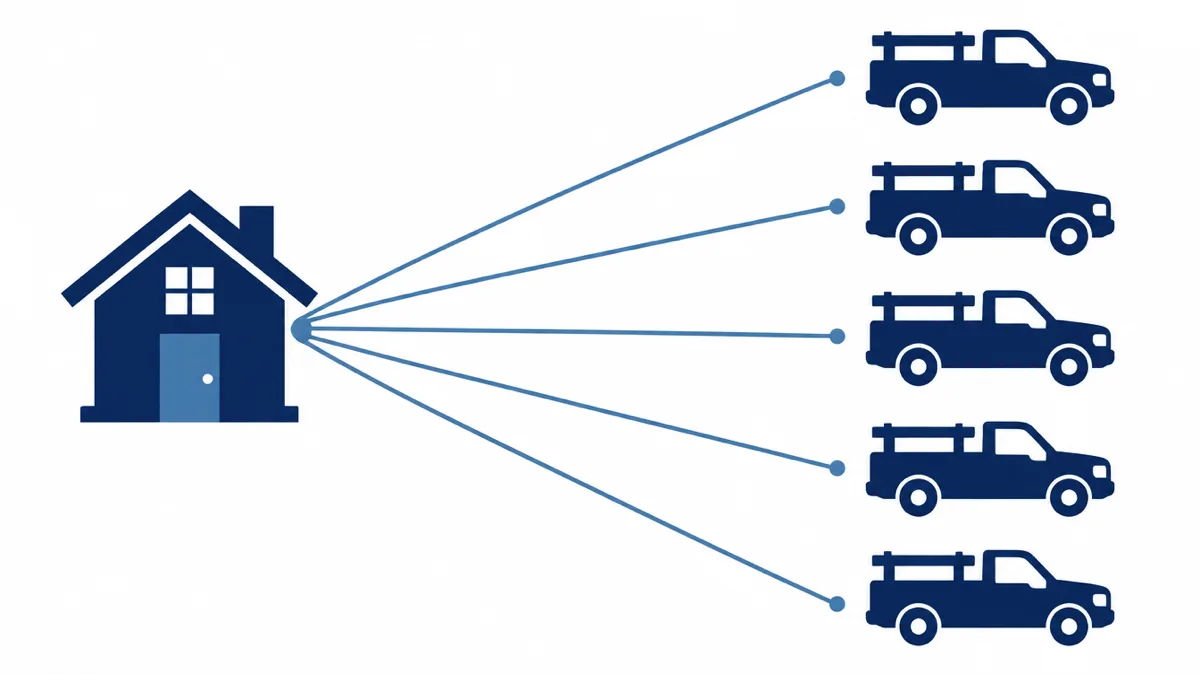
The picture to keep in mind with a shared lead is the one above: the homeowner filled in one form, and up to five trucks are now racing to the same driveway. Whatever the lead cost, your odds of booking it started at one in five before you picked up the phone, which is why the leads-per-job number in the next section matters more than the price.
The historical line. Back when Remodeling magazine tracked the 550 largest remodelers in the country, their average cost per lead ran $242 to $280 a year between 2015 and 2018, before ad costs climbed, and full-service remodelers paid roughly 30% more per lead than replacement contractors. If the biggest firms in the industry were paying that a decade ago, a $165 Google lead in 2026 is not the outrage it sounds like.
The Math: From a Lead to a Booked Job
Here is the arithmetic the lead-price guides skip. The contractor page uses a remodeler averaging $35,000 a job, closing one in four estimates. Add the step those guides leave out, that only about half of leads become a scheduled estimate, and it takes eight leads to book one job. Now multiply.
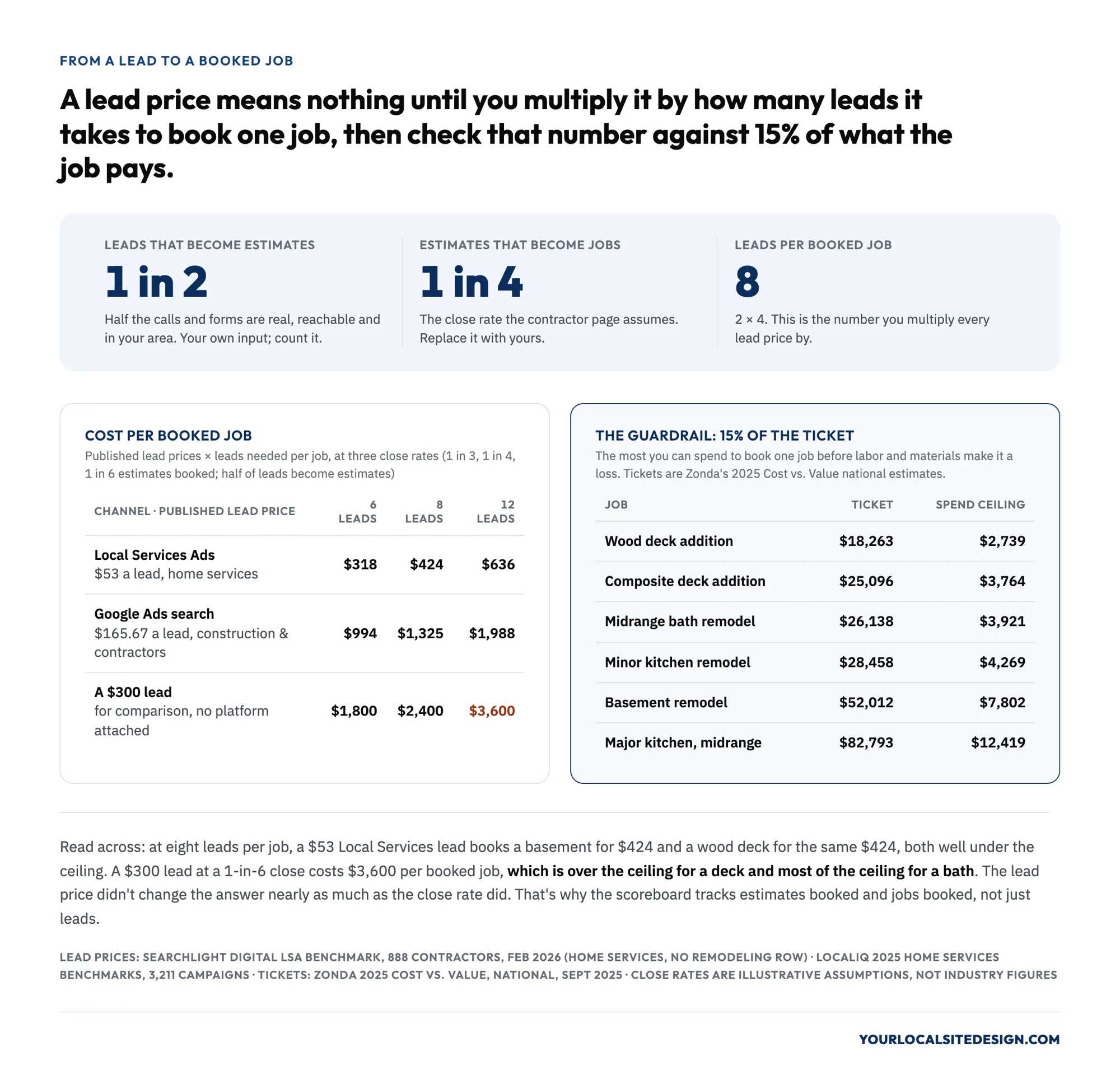
At eight leads per job, a $53 Local Services lead books a job for $424. A $165.67 Google search lead books one for $1,325. A $300 lead books one for $2,400. Now look at what the job pays. Zonda's 2025 Cost vs. Value report, the industry's standard estimate for a specified scope across 115 US markets, puts a minor kitchen remodel at $28,458, a midrange bath at $26,138, a basement remodel at $52,012, a wood deck at $18,263 and a midrange major kitchen at $82,793. Fifteen percent of each of those is the most you can spend to book it before labor and materials turn it into a loss: $4,269 for the minor kitchen, $3,921 for the bath, $7,802 for the basement, $2,739 for the deck, $12,419 for the major kitchen.
Every lead price in that table clears the ceiling for a kitchen or a basement at a one-in-four close. The deck is where it gets tight: a $300 lead at eight per job is $2,400 against a $2,739 ceiling, and if your close slips to one in six, it's $3,600 and you're underwater on every deck you sell. Same lead price. The thing that changed was you.
That is the whole point. Across that table, moving the close rate from one in three to one in six doubles the cost per booked job. Moving the lead price from $53 to $165 triples it, yes, but you don't control the lead price. You control whether the phone gets answered, whether the estimate gets scheduled the same day, and whether the site gave the homeowner a reason to trust you before they called. Those are the levers, and none of them show up in a cost-per-lead benchmark.
The Guardrail: When to Turn a Channel Off
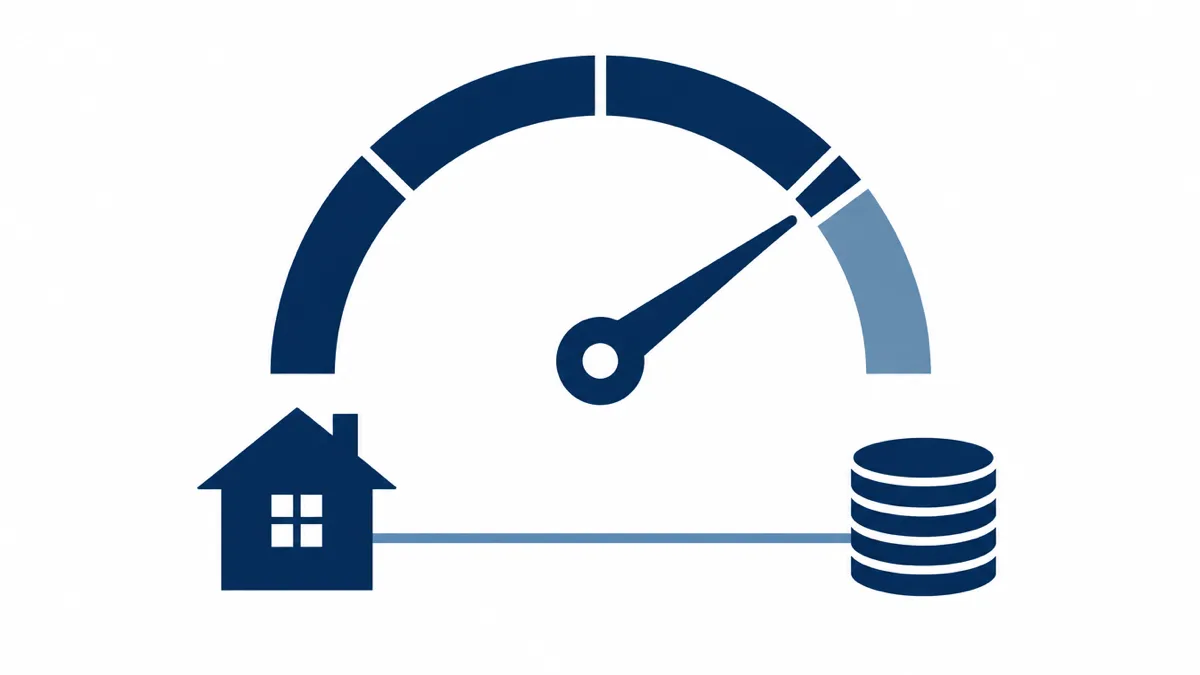
The rule the scoreboard runs on is simple enough to apply from a truck. Cost per booked job from a channel passes 15% of your average ticket two months running, the channel gets switched off. Under it, the channel earns more budget. The two-month rule stops one slow month from killing something that works, and the written threshold stops a good sales rep from talking you into a third month of something that doesn't.
Put real tickets against it and it reads like this:
- Roofer, asphalt replacement, Zonda national $31,871: the line is $4,781 per booked job. At eight leads a job, that's a $600 lead. Roofing's $228 median Google lead clears it comfortably; a storm-week door-knocker's shared lead often won't.
- Remodeler, midrange bath $26,138: the line is $3,921. A $165 Google lead at eight per job is $1,325. Fine. The same lead at a one-in-eight close, sixteen leads a job, is $2,650. Still fine, barely, and now every missed call matters.
- Deck builder, wood deck $18,263: the line is $2,739. This is the trade where shared leads at $200 to $300 stop making sense at a normal close rate, and where a page per deck type on your own site pays back fastest.
- Basement finisher, $52,012: the line is $7,802. Almost nothing you can buy a lead for will breach this. Your problem is never the lead price; it's whether there are enough leads at all, which is a ranking problem, not an ad problem.
The contractor page's shorter version of the same rule, for its $35,000 remodeler: a lead costing $150 and you scale it, a lead costing $600 and you shut it off no matter how good the traffic report looks. The 15% line is where "no matter what" comes from.
The Leak Before the Lead: Missed Calls
There's a cost that never appears in a cost-per-lead benchmark because it happens after the lead is already paid for. The homeowner called and nobody answered.
How often depends on who's counting. CallRail's January 2025 benchmark across 1.1 million small-business conversations put the home-services missed-call rate at 14%. Invoca's May 2024 figure was 27% of calls to home-services businesses not answered. Invoca's July 2026 report, across more than 70 million calls, found that only 52% of callers to home-services businesses speak with a person at all; for calls that last past 15 seconds the answer rate is 65%, and past 30 seconds, 73%. Those three measure slightly different things, so the honest summary is: somewhere between one in seven and one in two calls to a contractor never reaches a human. And by Invoca's 2024 platform data, fewer than 3% of callers who get pushed to voicemail leave a message. The rest dial the next name.
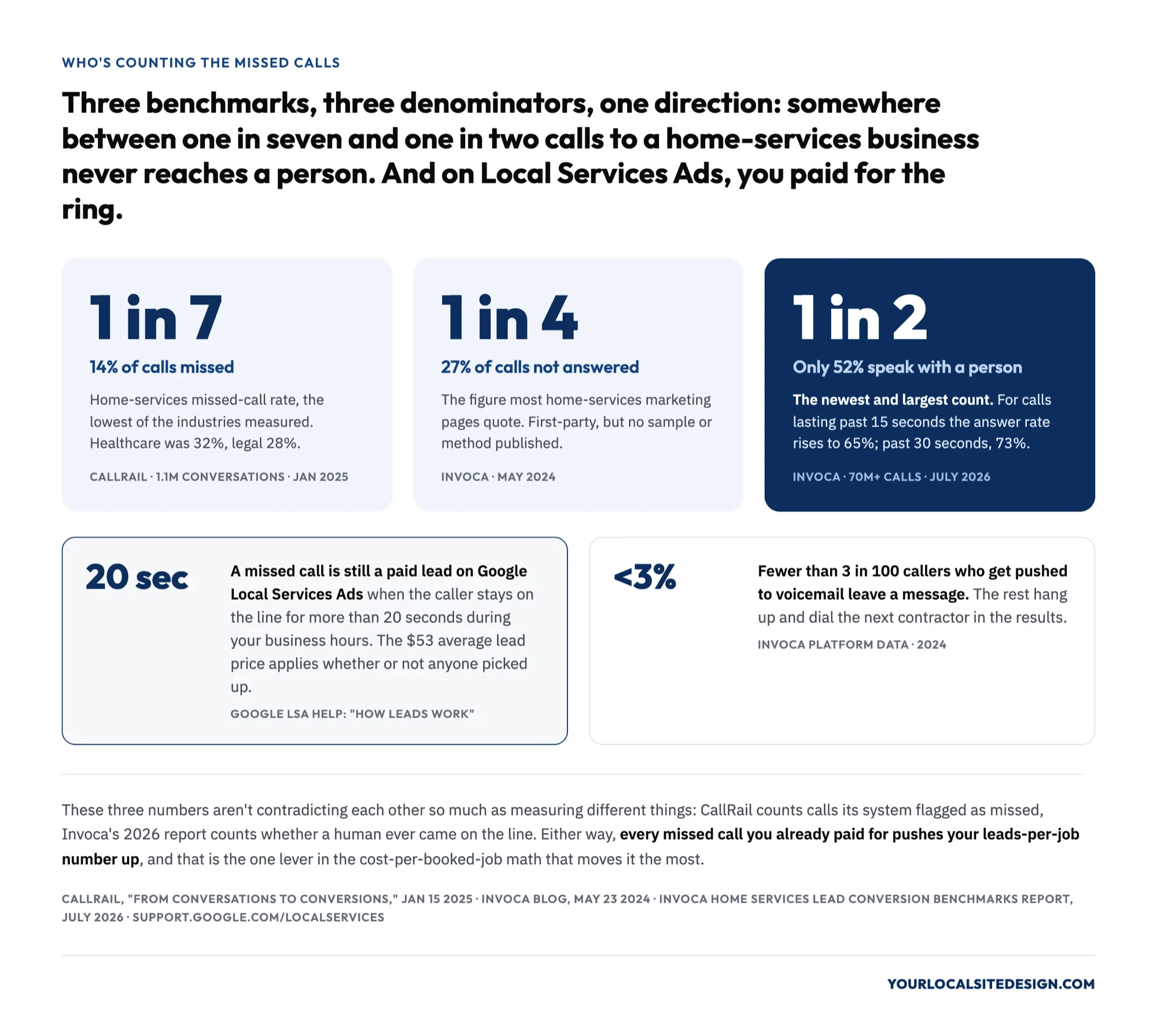
Two things make this expensive in a way the benchmarks hide. First, on Google Local Services Ads, a missed call is still a billable lead: Google's help page counts it as valid when "you missed a phone call during your business hours and the customer stays on the line for more than 20 seconds." You paid $53 for a ring. Second, every missed call that would have become an estimate pushes your leads-per-job number up, which is the one lever in the table above that moves cost per booked job the most. A contractor missing a third of calls isn't buying leads 33% less efficiently. They're often buying them half as efficiently, because the missed ones skew toward the homeowners who were ready to book.
Missed-call text-back, a message that goes out automatically about thirty seconds after a call you couldn't take, is the cheapest fix on the whole page, which is why it's part of the call engine rather than an upsell. It doesn't make the lead cheaper. It stops the lead you already bought from walking.
Why Your Agency Reports Traffic Instead
Ask most marketing companies what they report on and you'll hear traffic, impressions, keyword positions, maybe leads. None of those is wrong. None of them pays for a truck either. The reason cost per booked job is rare on an agency report isn't a conspiracy. It's that it's the only marketing number that responds to whether the effort was pointed somewhere useful rather than to how much effort was made. Traffic goes up when someone works harder. Cost per booked job only goes down when the work was aimed at the right job, the right town, and a phone that gets answered.
It also needs two numbers only you have: estimates booked and jobs booked. An agency can count calls and forms from the outside. It can't count signatures without you telling it, which is why the six-number scoreboard every contractor site I build ships with has two rows marked "you tell me." Skip those rows and you're back to a lead report. Fill them in and the whole table above becomes yours, with your close rate and your tickets instead of Zonda's.
Run Your Own Number This Week
You don't need software for this. You need last month's numbers and a calculator.
- Your average ticket. Total revenue last year divided by jobs. Or by job type, if a deck and a kitchen live in the same business, because the guardrail is different for each.
- Your ceiling. Fifteen percent of that ticket. Write it down. This is the number that overrules the sales call.
- Leads to estimates. Of the calls and forms last month, how many became a scheduled visit? If you don't know, that's the first thing to start counting.
- Estimates to jobs. Of the visits, how many signed? Most contractors know this one.
- Leads per job. Multiply the two gaps. One in two and one in four is eight. One in three and one in five is fifteen.
- Cost per booked job, by channel. What you paid Google, Angi, the ad agency and the website last month, each divided by the jobs that channel booked. Compare each to the ceiling.
If a channel is under the ceiling, give it more. If one is over it two months running, stop. If you don't know which channel a job came from, nothing above is possible, and that's a tracking problem to fix before the next ad dollar goes out.
If you'd rather have someone pull this apart for you, the $47 teardown looks at your site and the three contractors outranking you and tells you where the leak is, 48 hours, no call required. The build behind the scoreboard is $1,500 to $6,500 one time, detailed on the contractor website design page, and if you're still choosing who should build it, the comparison of ten web design companies for general contractors and remodelers covers who publishes a price and who lets you keep the site.